
Asian Mail Order Brides by Country
Explore 33 Asian nationalities across East Asia, Southeast Asia, South Asia, Central Asia, and the Middle East. Each region offers unique cultural values, relationship expectations, and family traditions. Find the right match for your lifestyle and values.
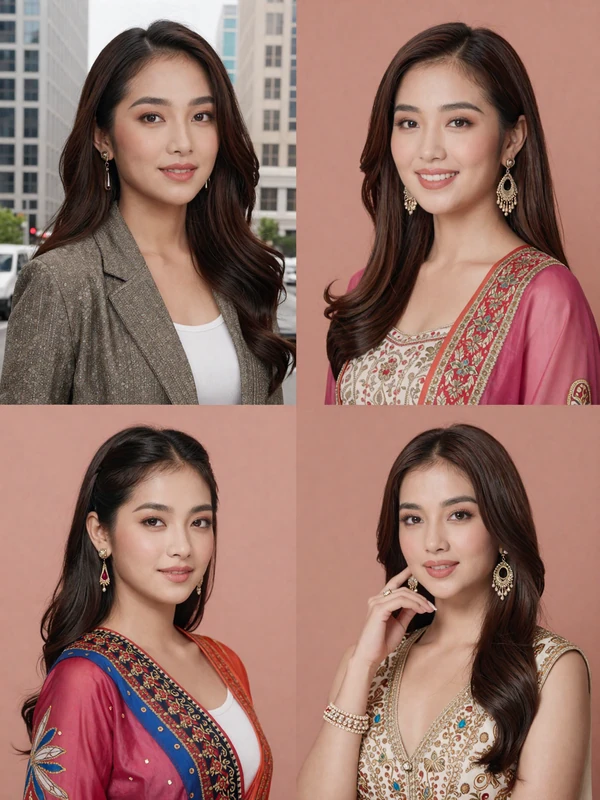
What Are Asian Mail Order Brides?
Asian mail-order brides are women from Asian countries who use international dating platforms to connect with men from Western nations, primarily the United States, Canada, Australia, and Europe. According to demographic data from 2002, approximately 76% of all mail-order brides worldwide come from Asian countries, making Asia the largest source region for international marriages.
The term "Asian mail-order brides" encompasses an enormous diversity of cultures, religions, languages, and traditions spanning from the Middle East to the Pacific Ocean. These women come from 50+ countries across five major regions: East Asia (China, Japan, Korea), Southeast Asia (Philippines, Vietnam, Thailand), South Asia (India, Pakistan, Bangladesh), Central Asia (Kazakhstan, Uzbekistan, Kyrgyzstan), and parts of the Middle East (Jordan, Yemen, Armenia).
Understanding regional and national differences is crucial for American men seeking Asian brides. A Filipino woman who speaks fluent English and follows Catholic traditions has vastly different expectations than a Pakistani woman from a conservative Muslim family, or a Japanese woman navigating modern urban Tokyo. This guide helps you understand these differences and choose the right country match for your values, lifestyle, and relationship goals.
Understanding Asian Regional Differences
East Asia: Modern, Educated, Career-Oriented
East Asian women from China, Japan, South Korea, Taiwan, and Mongolia typically come from highly developed economies with strong educational systems. These women often balance traditional family values with modern career ambitions. Many speak English to some degree, especially in urban areas. East Asian brides tend to be well-educated, financially independent, and expect egalitarian partnerships where both spouses work and share household responsibilities.
Chinese women represent the largest East Asian demographic in international dating, with millions of urban professionals seeking foreign partners. Japanese and Korean women are influenced by K-culture and anime/manga romanticism, often seeking Western men who appreciate their culture. Taiwanese women blend Chinese heritage with a more liberal, democratic society. Mongolian women carry nomadic traditions but increasingly embrace urban lifestyles.
Southeast Asia: Family-Focused, Traditional, English-Friendly
Southeast Asian women from the Philippines, Vietnam, Thailand, Indonesia, Malaysia, Cambodia, Laos, Myanmar (Burma), Singapore, Brunei, and East Timor are among the most popular choices for American men. According to historical data from the 1990s-2000s, the Philippines, Thailand, and Vietnam consistently ranked as top three source countries for Asian mail-order brides to the United States.
Filipino women have a unique advantage: most speak fluent English due to American colonial history and current education systems. They're predominantly Catholic, making cultural integration easier for Christian American men. Vietnamese and Thai women emphasize family loyalty and traditional gender roles, often seeking providers who value homemaking and child-rearing. Indonesian and Malaysian women come from diverse ethnic backgrounds (Malay, Chinese, Indian) and are often Muslim or Christian depending on region.
Southeast Asian women generally prioritize family over career, respect elders, and expect financial support for extended family members. This region has warm, tropical climates and lower costs of living, making it easier for American men to visit and date affordably.
South Asia: Religious, Family-Centered, Diverse Traditions
South Asian women from India, Pakistan, Bangladesh, Sri Lanka, Nepal, Bhutan, Maldives, and Afghanistan bring deep religious and cultural traditions to international marriages. Most are Hindu, Muslim, Buddhist, or Sikh, with religion playing a central role in daily life and family structure.
Indian women come from an incredibly diverse nation of 1.4 billion people with hundreds of languages and cultural variations. Many urban Indian women are highly educated professionals working in tech, medicine, and business. Pakistani and Bangladeshi women often come from conservative Muslim families with strict courtship rules and expectations of modest behavior. Sri Lankan women blend Buddhist, Hindu, and Christian traditions depending on ethnic background (Sinhalese, Tamil, Muslim).
South Asian brides typically expect close involvement with extended family, including parents and siblings. Arranged marriages are still common in these cultures, so women seeking foreign husbands may face family resistance. English proficiency is generally high in India, Pakistan, and Sri Lanka due to British colonial history, but varies in Nepal, Bhutan, and Afghanistan.
Central Asia: Nomadic Heritage, Soviet Influence, Emerging Markets
Central Asian women from Kazakhstan, Uzbekistan, Kyrgyzstan, Tajikistan, and Turkmenistan blend nomadic heritage, Soviet-era influences, and Islamic traditions. These women often have lighter skin and features that blend Asian, Middle Eastern, and European characteristics.
Kazakh women come from a rapidly developing oil-rich nation with modern cities like Almaty and Astana. Many speak Russian and some English. Uzbek women carry Persian-influenced culture with strong family traditions and Islamic values. Kyrgyz women maintain nomadic hospitality customs while embracing urban lifestyles. Tajik and Turkmen women come from more traditional, conservative societies with past government restrictions on international marriages (now largely relaxed).
Central Asian brides generally expect men to be providers and decision-makers while women manage household and children. They value hospitality, respect for elders, and large extended family networks. Language barriers can be significant, as many speak primarily Russian or native languages with limited English.
Middle East & West Asia: Conservative, Muslim-Majority, Complex Politics
Women from Armenia, Jordan, and Yemen represent smaller but distinct segments of the Asian mail-order bride market. Armenian women are predominantly Christian (Armenian Apostolic Church) with strong family values and European cultural influences. Jordanian women come from a moderate Muslim monarchy with relatively progressive attitudes compared to neighboring countries. Yemeni women face significant challenges due to ongoing conflict and conservative social norms.
These regions require extra cultural sensitivity, understanding of religious expectations, and awareness of political situations. American men pursuing Middle Eastern brides should be prepared for potential family disapproval, complex visa situations, and significant cultural adjustments.
Browse Asian Mail Order Brides by Country
Click any country below to explore detailed guides covering culture, dating customs, family expectations, communication tips, and travel advice for meeting women from that nation.
Southeast Asia
South Asia
Central Asia
Middle East & West Asia
Special Considerations
How to Choose the Right Asian Country for You
With 33 countries and billions of potential partners, choosing where to focus your search can feel overwhelming. Use these factors to narrow your options:
Language and Communication
If English fluency is important: Prioritize the Philippines (most fluent), Singapore, India, Pakistan, Malaysia, and Sri Lanka. These countries have English as an official or widely spoken language due to British or American colonial history.
If you're willing to use translation tools: China, Vietnam, Thailand, Japan, Korea, and Indonesia have large dating platforms with built-in translation features. Many younger women in these countries speak conversational English, especially in urban areas.
If language barriers concern you: Avoid Central Asian countries (Kazakhstan, Uzbekistan, Kyrgyzstan, Tajikistan, Turkmenistan) where Russian and native languages dominate with limited English.
Religious Compatibility
If you're Christian: Focus on the Philippines (predominantly Catholic), South Korea (significant Christian minority), Armenia (Armenian Apostolic), and parts of Indonesia, India, and Sri Lanka with Christian populations.
If you're non-religious or flexible: Consider East Asian countries (China, Japan, Taiwan) where Buddhism and secular lifestyles are common, or Vietnam and Thailand with relaxed Buddhist traditions.
If you're Muslim or willing to respect Islamic values: Look at Pakistan, Bangladesh, Indonesia, Malaysia, Brunei, and Central Asian countries where Islam shapes daily life and family expectations.
If you want minimal religious influence: Japan, China, and Singapore have the most secular societies with less emphasis on religious practice.
Traditional vs. Modern Gender Roles
If you want a traditional homemaker: Vietnam, Thailand, Philippines, Pakistan, Bangladesh, and most Central Asian countries emphasize women's roles as homemakers and mothers. These women typically expect men to be primary breadwinners.
If you want an equal partnership: Chinese, Japanese, Korean, Taiwanese, and Singaporean women often have careers and expect shared household responsibilities. They seek partners who support their professional ambitions.
If you're flexible: Indian, Malaysian, and Indonesian women vary widely - urban professionals expect equality while rural/traditional families follow conventional gender roles.
Family Involvement and Expectations
If you want privacy and independence: Japanese, Korean, and Singaporean cultures respect individual autonomy more than other Asian societies. While families matter, young couples maintain separate households and boundaries.
If you're comfortable with close family ties: Filipino, Vietnamese, Thai, Indian, Pakistani, and Bangladeshi families expect regular contact, financial support, and involvement in major decisions. Multi-generational living is common.
If you want moderate family involvement: Chinese, Taiwanese, and Malaysian women balance family obligations with couple independence, especially in urban areas.
Travel Accessibility and Safety
Easiest and safest to visit: Singapore, Japan, South Korea, Taiwan, Thailand, and Malaysia have excellent infrastructure, low crime, and well-developed tourism sectors.
Moderate difficulty but popular: Philippines, Vietnam, Indonesia, China, and India require more planning and caution in certain areas but have established international dating tourism.
Challenging due to politics or safety: Afghanistan, Yemen, and North Korea have significant travel restrictions, safety concerns, or near-impossibility of access. Myanmar (Burma) and parts of Pakistan require extra caution.
Cost of Dating and Travel
Most affordable: Vietnam, Thailand, Philippines, Cambodia, Laos, Pakistan, Bangladesh, Nepal, and Indonesia offer low costs for accommodation, food, and dating activities.
Moderate costs: China, India, Malaysia, and most Central Asian countries have growing middle classes with moderate living costs.
Expensive: Japan, South Korea, Singapore, and Brunei have high costs of living comparable to Western nations. Dating and travel expenses will be significant.
Safety and Scam-Avoidance Tips
International dating carries risks including romance scams, catfishing, human trafficking, and financial exploitation. Protect yourself with these evidence-based strategies:
Choose Reputable Dating Platforms
Use established international dating sites with verification systems, anti-scam policies, and secure communication tools. Top platforms like SakuraDate, NaomiDate, and AsiaFlame require women to verify identity with passports or government IDs and moderate profiles for suspicious activity. Avoid random Facebook contacts, Instagram messages, or websites with no company information.
Verify Identity Before Sending Money
According to the FBI, romance scams cost Americans over $1 billion annually. Never send money to someone you haven't met in person. Common scams include emergency requests (sick family member, visa fees, plane tickets, medical bills) and promises to visit if you just help with expenses. Legitimate women don't ask men they barely know for financial help.
Video Chat Before Traveling
Catfishing is common in international dating. Insist on multiple video calls (not pre-recorded) where she shows her face clearly and interacts in real-time. If she refuses video chat or makes endless excuses, she's likely using stolen photos. Tools like Google Reverse Image Search can check if her photos appear elsewhere online.
Meet in Public Places First
When you travel to meet her, arrange first meetings in public locations like cafes, restaurants, or shopping malls during daytime hours. Avoid going to her home, isolated areas, or private rooms until you've established trust over multiple meetings. Tell friends or family your itinerary and check in regularly.
Research Trafficking Risks
Certain Asian countries have documented human trafficking concerns. Cambodia, Myanmar (Burma), Laos, and parts of Indonesia and Thailand have networks that exploit women through fake marriages or forced labor. Be cautious of women who seem coerced, controlled by others, or unable to speak freely. Report suspicious situations to local authorities or US Embassy.
Understand Visa and Marriage Laws
The International Marriage Broker Regulation Act (IMBRA) requires American men to disclose criminal history when petitioning for K-1 fiancé visas. You cannot bring a foreign bride to the US without following legal immigration processes. Any agent or woman promising quick marriages or ways around visa requirements is running a scam.
Watch for Red Flags
- Asks for money within first few weeks of chatting
- Refuses video calls or always has excuses (broken camera, bad internet, shy)
- Declares love very quickly without knowing you well
- Photos look professional or model-quality
- Vague about personal details or stories don't add up
- Pressures you to move off dating platform to private email/WhatsApp immediately
- Claims to work in oil rig, military deployment, or other isolated situations
- English is oddly perfect or oddly broken with copy-paste phrases
Trust your instincts. If something feels wrong, it probably is. Slow down, ask questions, verify information, and don't let emotions override common sense.
Frequently Asked Questions
The Philippines is historically the largest source country for Asian mail-order brides to the United States. According to 2002 data, approximately 76% of all mail-order brides worldwide came from Asian countries, with the Philippines, China, Vietnam, and Thailand being the top four source nations. The Philippines alone accounted for a significant portion despite the practice being technically illegal there.
The Philippines remains popular because Filipino women speak fluent English, are predominantly Catholic (sharing religious values with many American men), and have a cultural familiarity with Western lifestyles due to American colonial history. Current estimates suggest 4,000-6,000 Asian mail-order brides marry American men annually across all Asian countries.
Choose an Asian country based on language compatibility, cultural values, religious alignment, and lifestyle preferences. Filipino women often speak English fluently, making communication easier. If you value traditional family structures, consider Vietnamese, Thai, or Pakistani women. For more modern, career-oriented partners, look at Chinese, Japanese, Korean, or Singaporean women.
Research each country's dating customs and family expectations before committing. Consider factors like travel costs (Southeast Asia is cheapest), safety (Singapore, Japan, Korea are safest), and visa process complexity. Many men start with the Philippines or Vietnam because of English skills, affordability, and established international dating infrastructure.
No, Asian women vary dramatically by region, culture, religion, and individual personality. East Asian women (Chinese, Japanese, Korean) often emphasize education and career. Southeast Asian women (Filipino, Thai, Vietnamese) tend to prioritize family and traditional values. South Asian women (Indian, Pakistani, Bangladeshi) often have strong religious and cultural traditions. Central Asian women (Kazakh, Uzbek, Kyrgyz) blend nomadic heritage with modern city life.
Treating all Asian women as identical is both inaccurate and disrespectful. A Japanese woman working in Tokyo's tech industry has completely different life experiences than a rural Thai woman from a farming village, or a Pakistani woman from a conservative Muslim family. Research the specific country and treat each woman as an individual with unique personality, goals, and expectations.
The safest Asian countries for international dating include Singapore, Japan, South Korea, Taiwan, and Malaysia, which have stable governments, low crime rates, and well-developed tourism infrastructure. Thailand, Philippines, and Vietnam are popular but require more caution in certain areas (avoid red-light districts, research neighborhood safety, don't flash wealth).
Always use reputable dating platforms with verification systems, meet in public places, research local scams, and be aware of trafficking risks in Cambodia, Myanmar, Laos, and certain parts of Indonesia and Thailand. Countries with ongoing conflict or political instability (Afghanistan, Yemen, parts of Pakistan) require extreme caution or should be avoided entirely. Check US State Department travel advisories before planning trips.
If you're bringing an Asian bride to the United States, you'll use the same K-1 fiancé visa process regardless of her country of origin. The K-1 visa allows your foreign fiancée to enter the US for 90 days to marry you. However, visa approval rates, processing times, and documentation requirements vary significantly by country.
Countries with strong US diplomatic relations (Japan, South Korea, Singapore, Philippines, Taiwan) typically have smoother processes with higher approval rates. Countries with more complex political situations (Afghanistan, Yemen, certain Central Asian nations) may face additional scrutiny, longer wait times, and higher rejection rates. Some countries have bilateral agreements affecting visa processing. Consult an immigration attorney familiar with your bride's specific country for personalized guidance. The IMBRA law requires you to disclose criminal history regardless of her nationality.
Summary: Finding Your Asian Bride by Country
Asia offers unparalleled diversity in international dating, with 33 countries spanning five major regions and billions of potential partners. Understanding regional and national differences is essential for finding a compatible match that aligns with your values, lifestyle, and relationship goals.
According to historical data from 2002, 76% of all mail-order brides worldwide come from Asian countries, with the Philippines, China, Vietnam, and Thailand as consistent top sources. The Philippines remains most popular for American men due to English fluency, Catholic religion, and cultural familiarity. East Asian women from developed nations like Japan, Korea, and Singapore offer educated, career-oriented partners seeking equal relationships. Southeast Asian women from Thailand, Vietnam, and Philippines prioritize traditional family values and homemaking roles.
Choose your focus country based on language compatibility (Philippines and India for English speakers), religious alignment (Philippines and South Korea for Christians, Pakistan and Indonesia for Muslims, China and Japan for secular lifestyles), desired gender roles (Vietnam and Thailand for traditional, Japan and Korea for modern), and family involvement expectations (Japanese and Korean for independence, Filipino and Indian for close family ties).
Safety should be your top priority. Use reputable dating platforms with identity verification like SakuraDate, NaomiDate, and AsiaFlame. Never send money before meeting in person. Always video chat multiple times to verify identity. Meet in public places first. Research trafficking risks in Cambodia, Myanmar, and Laos. The safest countries for travel and dating are Singapore, Japan, South Korea, Taiwan, and Malaysia.
This guide connects you to detailed country pages for all 33 Asian nations in our database. Each country page provides cultural insights, dating customs, communication tips, family expectations, travel advice, and safety considerations specific to that nationality. Start by exploring 2-3 countries that match your priorities, then narrow your focus as you learn more about each culture and begin conversations with real women.
Remember: international marriage is a serious commitment requiring cultural sensitivity, patience, legal compliance (K-1 visa and IMBRA), and genuine respect for the woman's background and values. Take your time, do your research, and approach this journey with realistic expectations and an open heart.